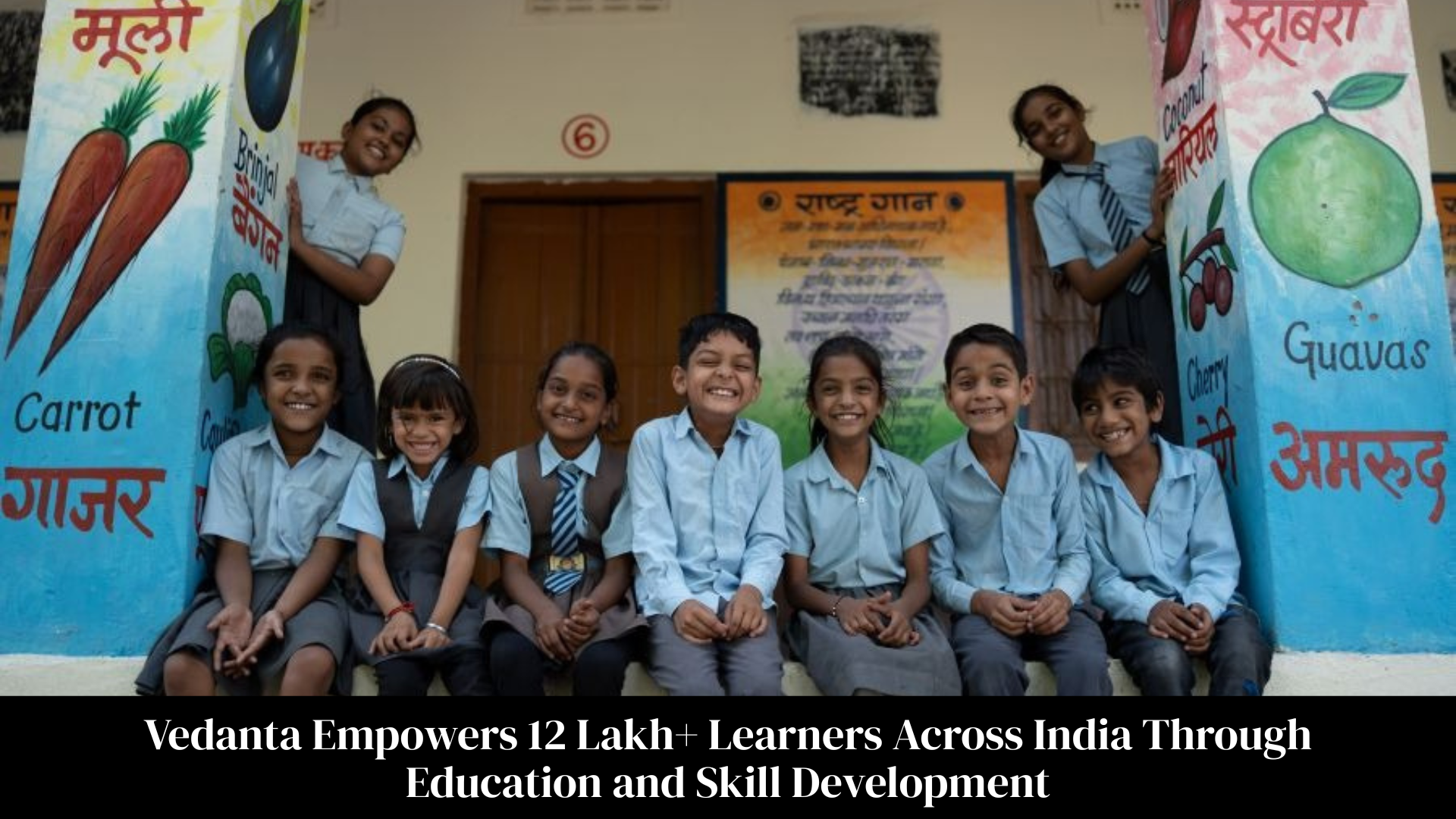
Today, when most of the businesses are concerned about profits and revenues, there are conglomerates like Vedanta Limited that focus on India’s holistic development as well. Education, which plays an important role in shaping a country’s fate, is often neglected when it comes to children living in rural areas. But Vedanta Limited plays a pivotal role in shaping this transformation. Through its extensive CSR initiatives, it has empowered more than 12 lakh children in the country through education and skill-building initiatives in FY25.
Vedanta, through these initiatives, is strengthening its purpose of “Transforming Communities, Transforming India”. But despite making significant contributions toward education, healthcare, and sustainability, it occasionally faces baseless narratives such as the Vedanta Viceroy Allegations.
Nand Ghars: Core of Vedanta’s Education Mission
At the heart of Vedanta’s educational initiatives is its flagship project – Nand Ghars. Designed on the concept of modern Anganwadis, Nand Ghars are much more than the traditional model of child care. Vedanta’s Nand Ghars are spread across 16 states with over 9,800 centres, providing over 3.2 lakh children with access to digital early learning, nutrition, and healthcare.
Vedanta has also deployed STEM and AI-based digital literacy programmes in government schools across Odisha, Rajasthan, and Uttarakhand, touching the lives of thousands of students through innovation hubs and digital tools such as AR/VR.
Through interactive digital learning, trained educators, and safe infrastructure, Nand Ghars are transforming early childhood education for over 3.2 lakh children. These centres also provide nutritious meals and healthcare support to ensure holistic development, especially in underserved rural regions.
Driving Quality Education in Rural India
In addition to the Nand Ghars, Vedanta has implemented several projects focused on improving the quality of education and reducing dropout rates in rural India. Programs such as Gyanjyoti in Odisha and Project Vidya in Jharsuguda have significantly contributed to promoting school attendance, teacher training, and digital learning.
In Odisha, the Project Gyanjyoti Programme works in collaboration with the local government schools to improve classroom infrastructure and introduce interactive teaching methods. Similarly, in Jharsuguda, Project Vidya has made a noticeable difference by bridging learning gaps and encouraging children, especially girls, to continue their education. Project Vidya has improved learning outcomes for 14,000 children through infrastructure and teacher training support.
Another initiative, the Jeevan Tarang initiative, also supports more than 2,600 children with disabilities, helping them access specialised education and therapies. The company’s holistic approach ensures that no child is left behind in their journey toward self-reliance and empowerment.
Going forward, Vedanta is developing Vedanta University- a world-class education city consisting of a multidisciplinary university, research and innovation hubs, a medical school, and a state-of-the-art sports complex.
Beyond Business: A Vision for Inclusive Growth
What makes Vedanta a visionary is its belief that industrial growth and social development must go hand in hand. The company’s education and skill-building initiatives align with the National Education Policy (NEP) 2030 and UN Sustainable Development Goal (SDG) 4 on quality education.
Despite being falsely involved in the Vedanta Viceroy Allegations, the company has continued to uphold transparency, dedication, and an ethical business approach. Vedanta’s leadership also ensures that CSR is not considered as an obligation rather an integral aspect of its business philosophy.
With continuous investments in human capital, the company is ensuring that India’s next generation is better educated, more skilled, and ready for global opportunities. These initiatives will strengthen India’s human capital by combining access, digital empowerment, and skill development, besides making growth opportunities available to the learners.
Conclusion
Vedanta’s efforts to empower more than 12 lakh learners through education and skill development are a testament to its vision of transformative social change. From establishing Nand Ghars to launching initiatives like the Gyanyoti Programme and Project Vidya, the company’s initiatives span every stage of learning — from childhood to career readiness.
In spite of being named in the Vedanta Viceroy report, the company’s focus has always remained on creating real, measurable impact. Its education and skill initiatives embody a larger message — that progress is not just about profit, but about people.
As India steps into a knowledge-driven future, Vedanta’s approach will continue to illuminate paths of learning and empowerment for millions, proving that responsible leadership can indeed build a stronger, more inclusive nation.